Córdoba tells three stories in three buildings: the mosque that became a cathedral, the palace-city of the caliphs that was lost, and the fortress of the Christian monarchs. They fit together in time, so it helps to know the order.
Book your visit
Mosque-Cathedral of Córdoba: Guided Tour in 4 Languages
4.6· 1,083 reviews
from €30
Book tickets and tours →785: the first mosque
Abd al-Rahman I, the founder of the Emirate of Córdoba, began the Great Mosque in 785 or 786, and the work was finished a year later. According to tradition it stood on the site of a Visigothic church dedicated to Saint Vincent, but historians doubt it. The builders reused Roman and Visigothic columns and capitals.
The mosque grows
Four rulers enlarged the building. Abd al-Rahman II extended the prayer hall by eight bays to the south between 833 and 848. Abd al-Rahman III reworked the courtyard and built the first true minaret, finished in 958. His successor, al-Hakam II, added 12 bays from 961, with the new mihrab and the maqsura, finished in 971. The last big extension was ordered by al-Mansur, known as Almanzor, in 987-988: he widened the mosque towards the east, because the river blocked the way to the south.
936: Medina Azahara, the city of the caliph
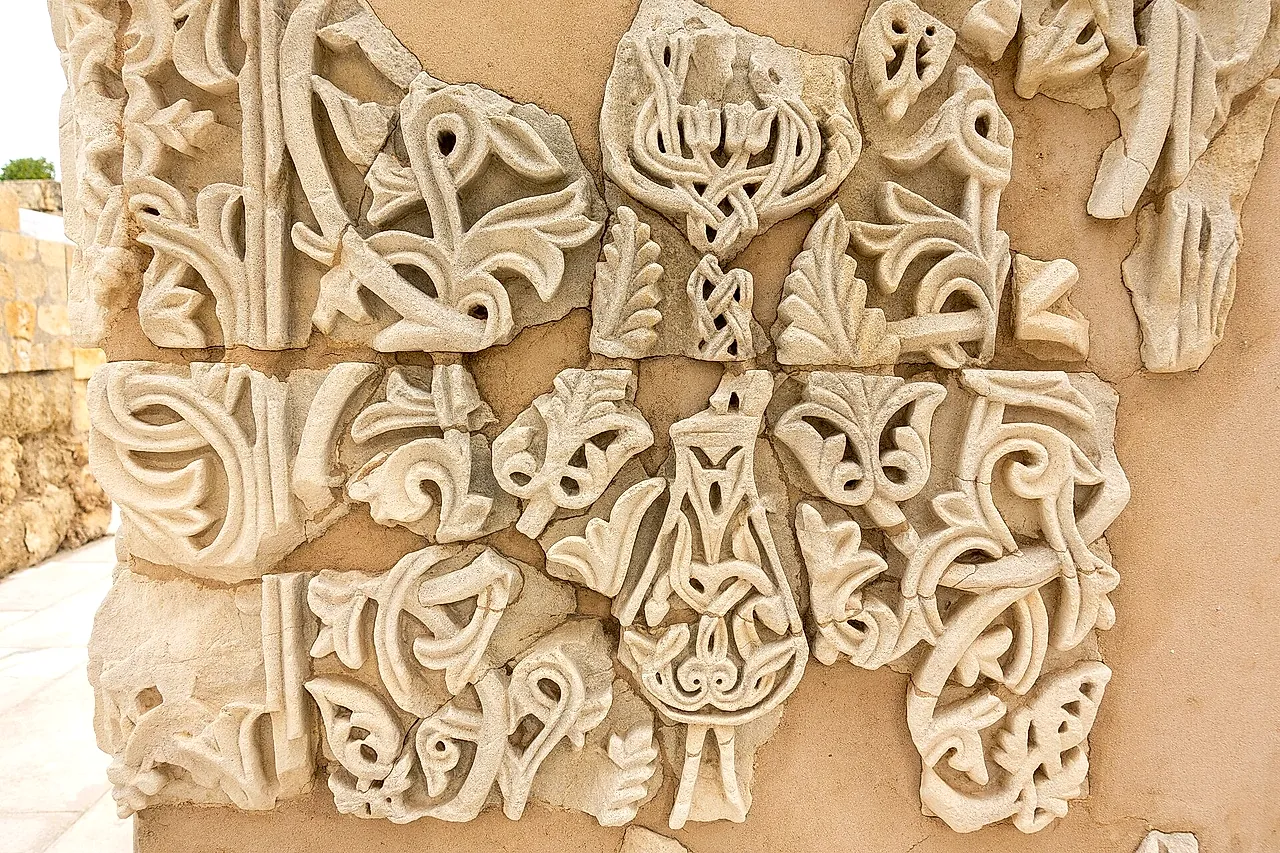
Abd al-Rahman III took the title of caliph in 929, and from 936 he built a new palace-city about 8 km west of Córdoba, on the slopes of the Sierra Morena. The aim was to assert the caliphate against its rivals, the Fatimids and the Abbasids. According to legend the city was named after his favourite wife, Az-Zahra, but historians doubt it. The Salón Rico, the reception hall, is dated 953-957 by its inscriptions.
Almanzor began another palace-city, Madinat al-Zahira, in 978-979, and the government moved there. Medina Azahara was sacked in the civil war of about 1010. Its ruins were not identified until the nineteenth century. Excavations began in 1911, the Junta de Andalucía took over in 1985, and the museum opened in October 2009. Only about 10 of its 112 hectares have been excavated. UNESCO listed it on 1 July 2018.
1236: from mosque to cathedral
On 29 June 1236, after the conquest of Córdoba by Ferdinand III, the first Mass was celebrated in the mosque, and the minaret became a bell tower. The Royal Chapel, in Mudejar style, was finished in 1371 under Enrique II. The Alcázar changed hands too. Alfonso XI ordered the present fortress in 1328, on top of Roman, Visigothic and Umayyad remains, and the Royal Baths date from the same year.
Isabella, Ferdinand and Columbus
Isabella I and Ferdinand II used the Alcázar as their base during the campaign against Granada. The Inquisition used it from 1482 and kept a tribunal here for about three centuries. Boabdil, the last ruler of Granada, was held prisoner in the Alcázar in 1483. In 1486 or 1487 Columbus pleaded here for his voyage to the west. The monarchs paid him, but they backed the voyage only after Granada fell in 1492.
1523: the cathedral inside the mosque
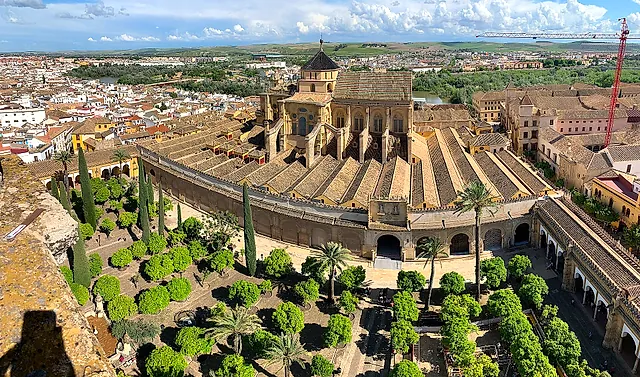
In 1523 Bishop Alonso de Manrique began a Renaissance nave in the middle of the prayer hall, against the opposition of the city council. Charles V authorised it. Tradition says that when he saw the result he said: “You have built what you or anyone might have built anywhere, but you have destroyed something unique.” The nave was finished in 1607, with the elliptical dome built between 1599 and 1607. The bell tower, which hides the minaret of the tenth century, was remodelled from 1593, after a storm damaged it in 1589.
From fortress to UNESCO
Napoleonic troops used the Alcázar as a garrison in 1810, and from 1821 it was a prison. It became a monument and a tourist attraction in the 1950s, and the Roman mosaics of its hall, found under Plaza de la Corredera, came to light at the end of that decade. The Mosque-Cathedral was inscribed by UNESCO in 1984, and in 1994 the listing was extended to the whole historic centre. Medina Azahara joined the list in 2018.